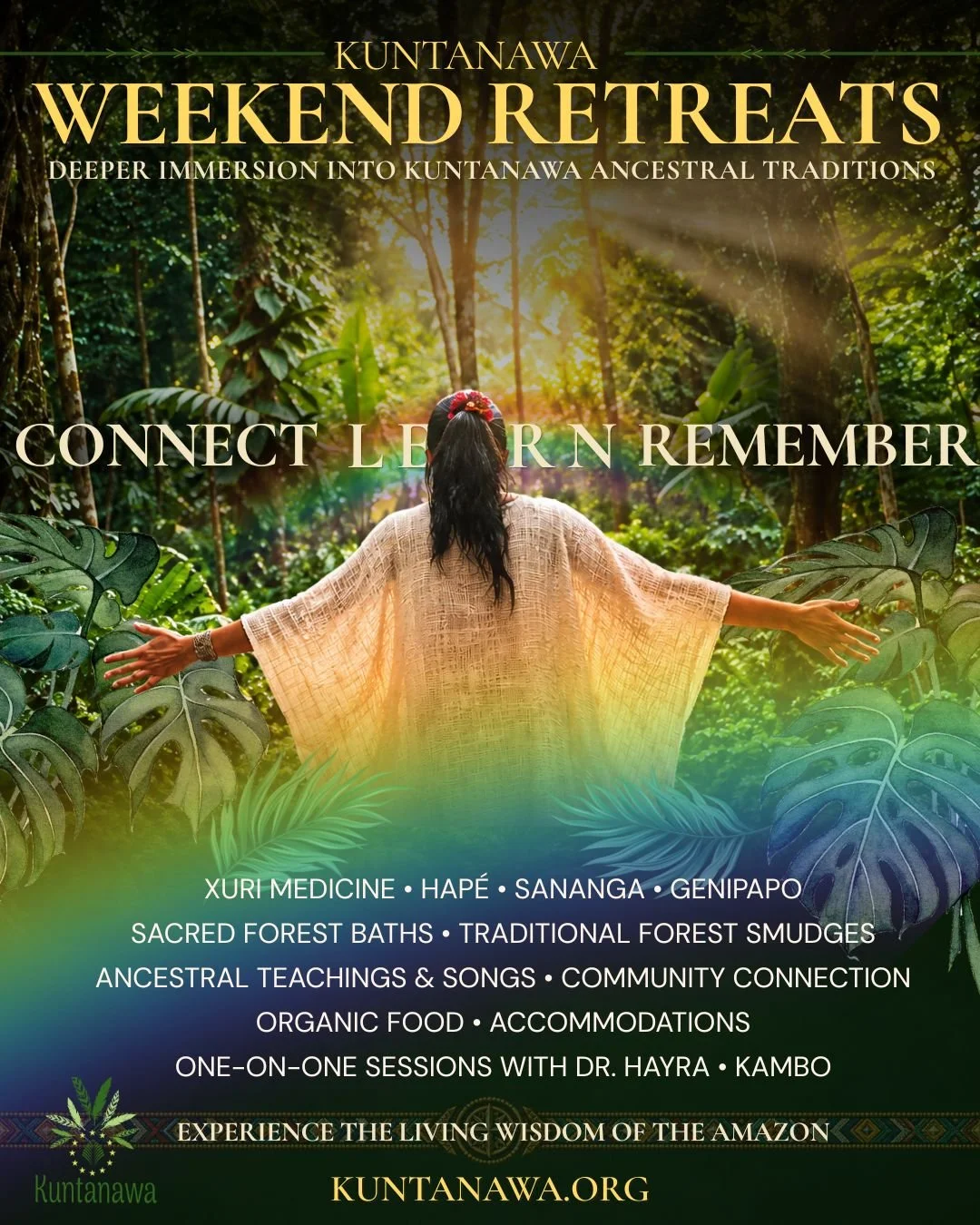
Who We Are
We are the Kuntanawa. Our lineage reaches back thousands of years in the Amazon, and we are still here — through the genocide of 1911, through slavery that did not end for us until 1988, through the long work of rebuilding what was taken. Our medicines, our songs, and our teachings survived with us.
Today we are guardians of over 250,000 acres of forest. We are restoring what was cleared, teaching our children to plant, and carrying our traditions forward. We came to the United States to build an economy for our people — to rebuild our villages, our culture, and our schools, and to share a sacred knowledge so the world can heal alongside us.
We are the people of the stars, and the people of the coconut and the palm. We come as a rainbow tribe of the Earth, to bring unity to all — so that we may come together, transmute the pain carried along the paths of all our ancestors, and find the way of the new Earth together. We stand hand in hand, around the world, as stars. Shining the way forward.
Meet Your Guides
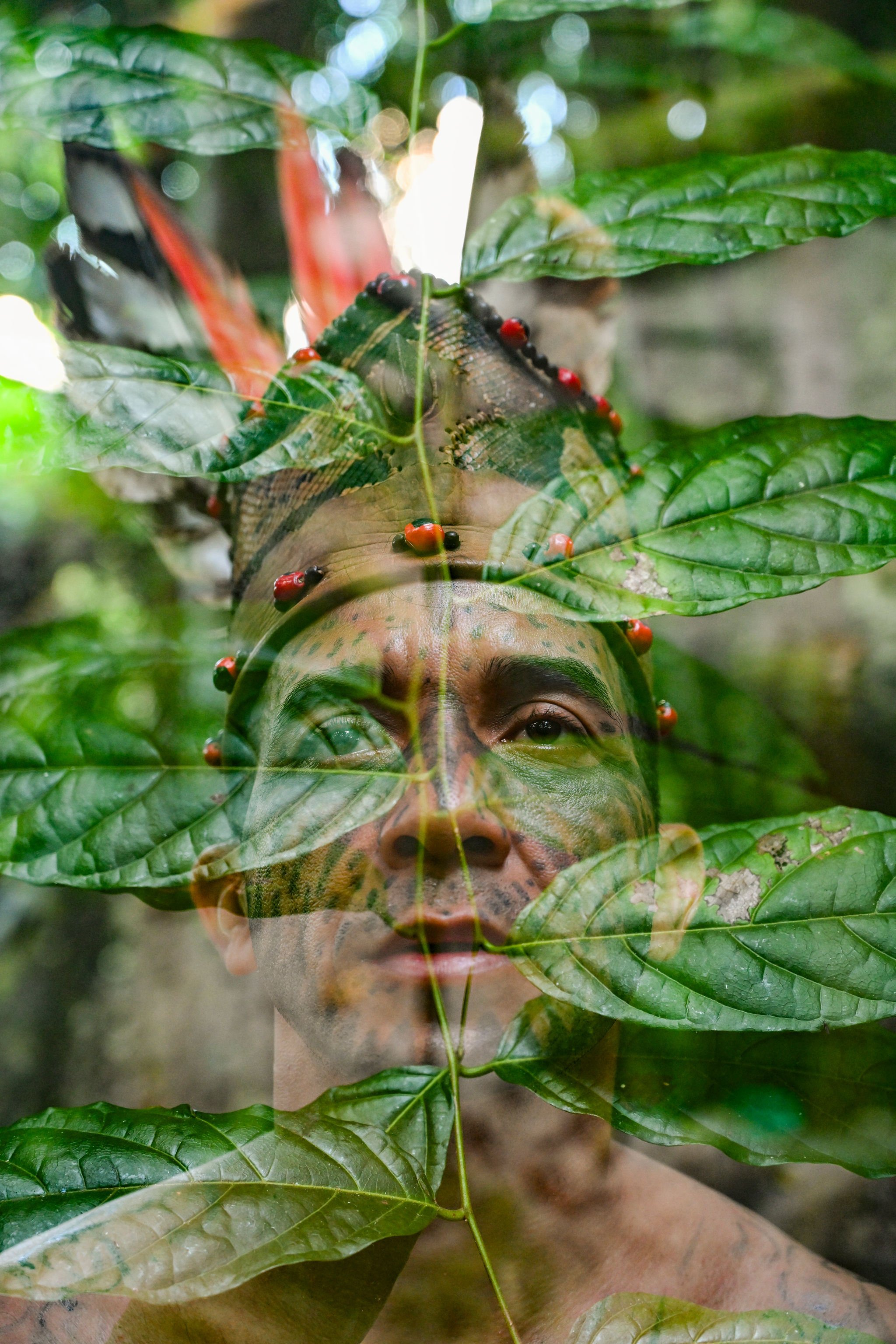
Dr. Hayra Kuntanawa
Dr. Hayra Kuntanawa is co-leader of our people alongside Haru, co-founder of Kuntanawa Nation, Founder of Kuntanawa Goods, and Financial Director of ASCAK, the association that represents the Kuntanawa people in Brazil. She is the hand behind much of what holds our work together — the organizations, the international relationships, the retreats and educational programs that let our voice reach the world in our own words.
She has walked with Xuri and the medicines of the Amazon for over 17 years, studying across South America and beyond, and came to live among our people nearly ten years ago after meeting Prince Haru. She is a Doctor of Oriental Medicine, trained across many traditions of healing — acupuncture and esoteric acupuncture, hypnotherapy, Reiki, massage, holistic doula care, face reading, Akashic Records, and soul retrieval. She is also a musical artist and a teacher, sharing prayer, song, and ceremony beside Haru.
Her life’s work is the bridge itself — between the Amazon and the wider world, between ancestral knowledge and the lives people live now — so that what is carried here can be shared, and so that our people decide how our culture is held and represented.
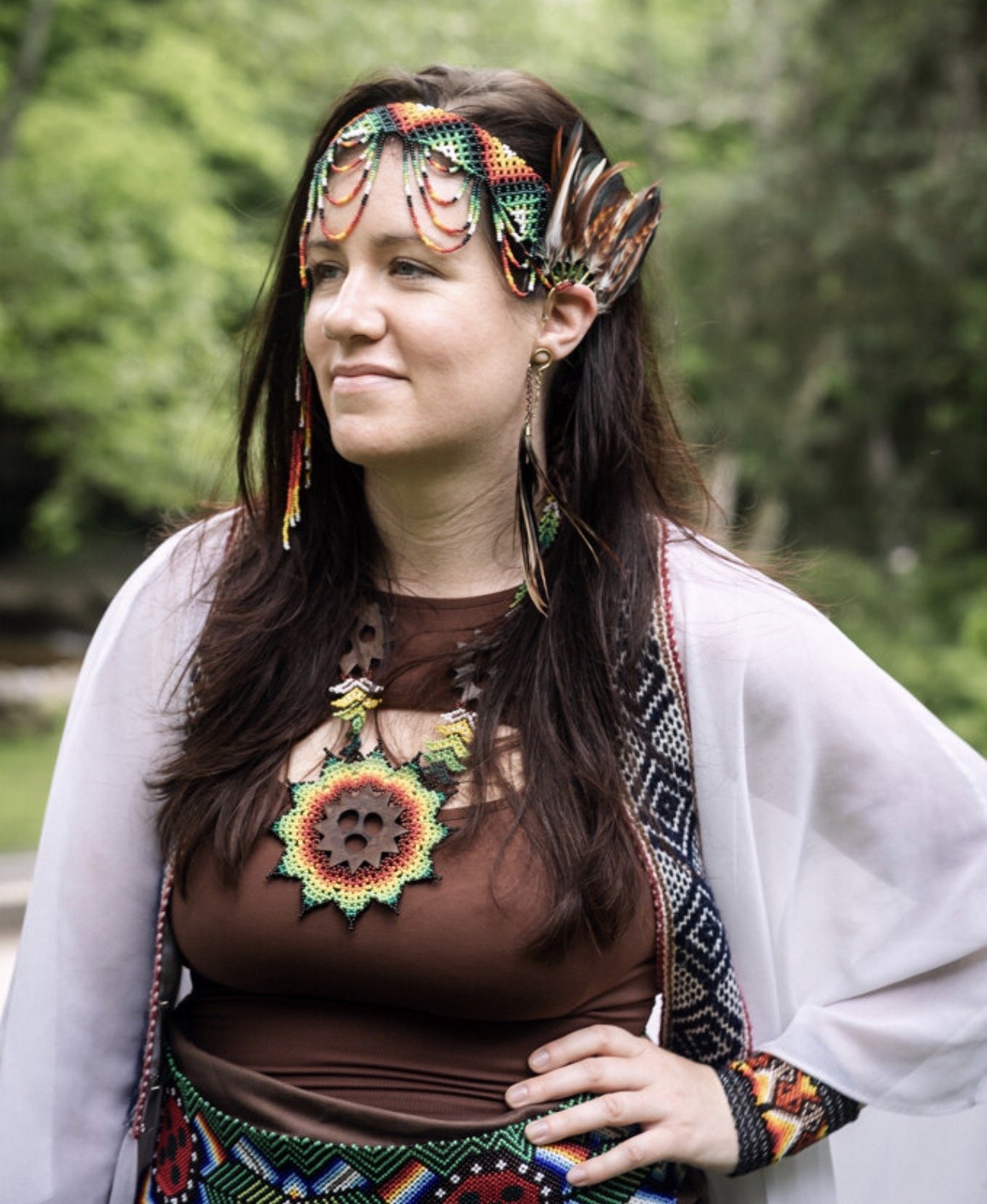
Prince Haru Kuntanawa
Prince Haru Kuntanawa is the leader of our people and a voice for Indigenous rights and cultural preservation. He is Founder and President of ASCAK, Founder and CEO of Kuntanawa Nation and Kuntanawa Goods, creator of the Pano Corridor Project, uniting Pano-speaking tribes across borders to protect our ecosystems, and Ambassador of SIFBA, the soccer federation of Brazil and the Americas. He is a musical artist, an international speaker, and a carrier of the songs and ceremonies of our lineage
He has worked with the Xuri medicine for over 36 years, beginning when our people gained their freedom in 1988, and is a recognized teacher of ancestral knowledge within the Pano lineage of Acre, Brazil.
He carries the title Prince rather than King, though his great-great-grandfather was one. He believes the Earth is the Queen and we are all her princes and princesses — each of us royalty, each of us responsible for her care. He does not use the word Chief; that word came with slavery, and he chooses not to carry it forward.
A Day With Us
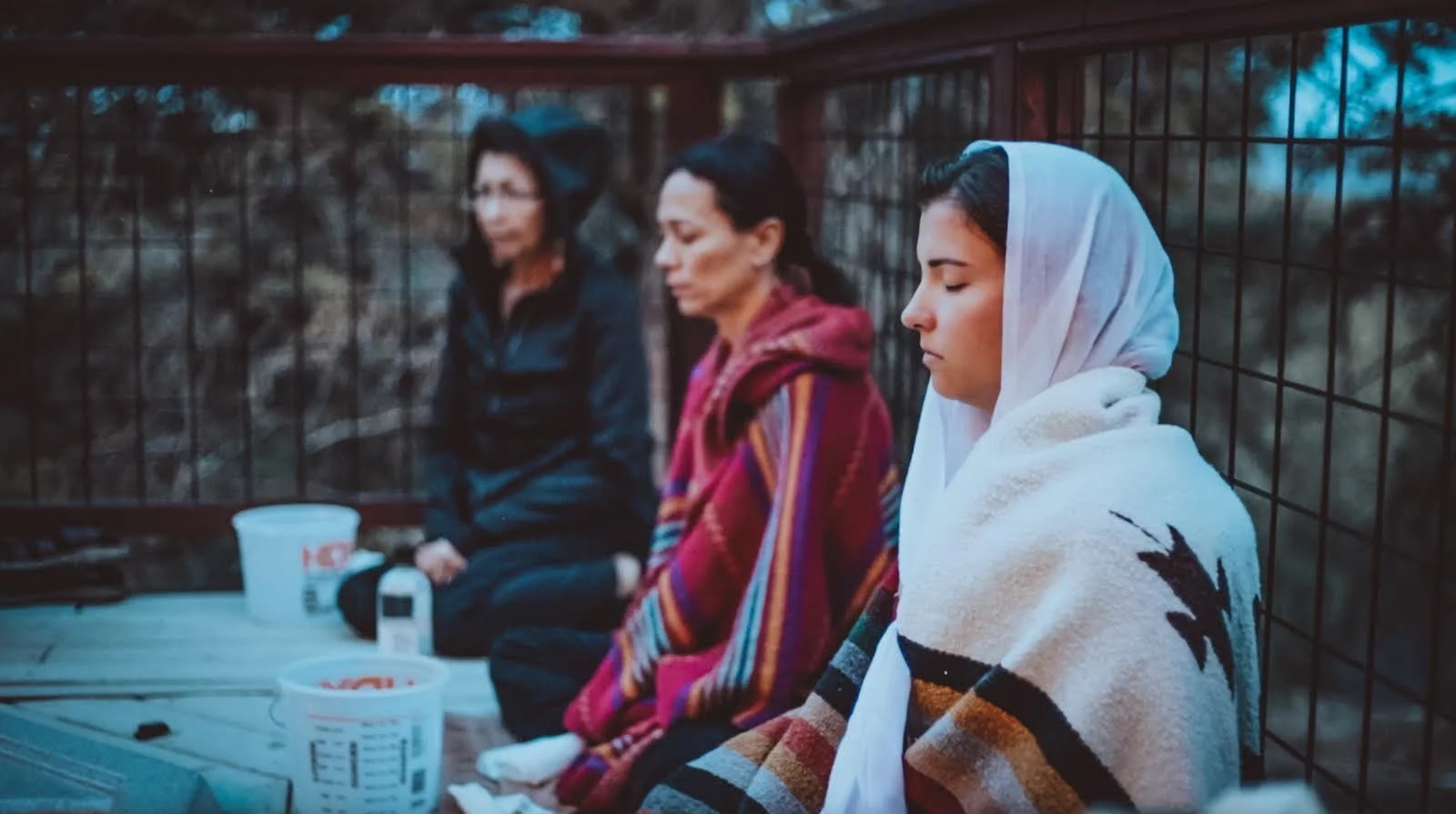
Every gathering finds its own rhythm. We hold a shape for each day, and within it we listen — to the people who have come, to what the medicine asks, to what the moment needs. This is the heart of the work, and it is why no two gatherings are ever the same.
Mornings begin gently. There is time to wake, to eat together, and to sit in the quiet before the day opens. We come together in circle to share where each of us is, and the teachings often begin here — in conversation, in song, in the questions people bring.
Through the day there are medicines offered — hapé, sananga, genipapo, forest baths and smudges — along with time to rest, to walk, to be still, and to receive one-on-one care. Nothing is required of you. Take what calls you and let the rest pass by. Each of these medicines is explained below.
Evenings belong to Xuri. This is ancestral technology, carried by our lineage for thousands of years, and we bring to it the seriousness it asks for — for ourselves and for the group, as we journey together. As night comes we gather, and the songs begin. Prayer is set — for the group, for what each person carries, for what is needed here. Your guides hold that focus, and so do all of us as a people, and so do you. Everyone sits up into their own truth. That is what makes the work possible.
What comes forward in those hours is what is ready to be seen. Some of it is beautiful. Some of it is shadow — the things we have carried, the things we have inherited, the parts of the human experience that ask to be looked at honestly. We do not turn away from that. We meet it, and we let it be understood.
The world is loud with confusion, and many have forgotten the rhythms of the Earth — what it is to live as one with her. She is our mother and we are her children. Remembering that is not an idea; it is something the body knows again. From there comes responsibility — for ourselves, for our families, for the world we share.
Afterward there is rest, and in the morning we come back together to share what moved through the night.
Safety in the Circle
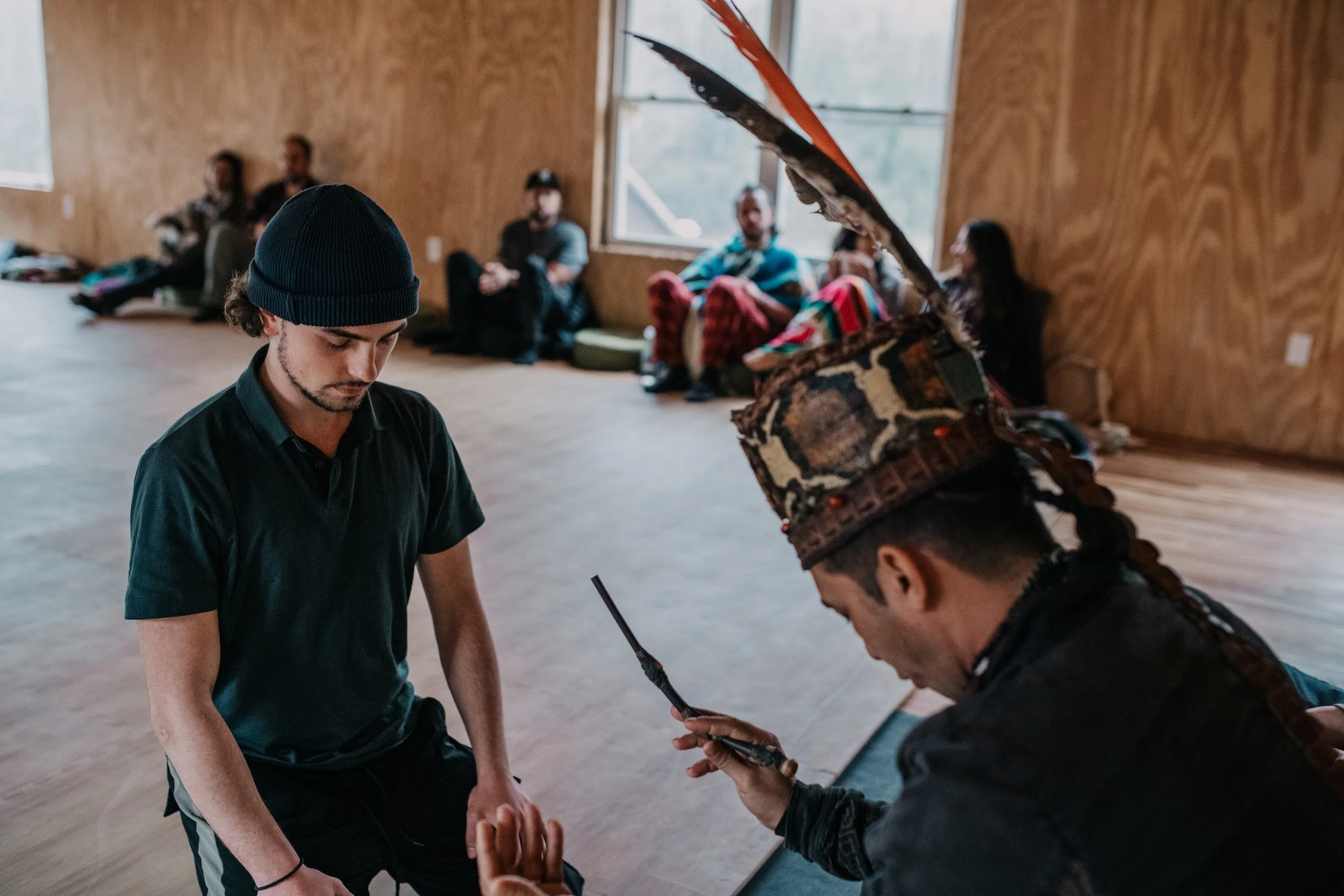
We know what has happened in ceremony spaces. People have used the position of holding space to take — money, power, sex — from people who came to them open and vulnerable. Many who want this work are afraid of it for good reason, and women especially.
So we want to say this plainly.
Shaman is not a word from our culture, and it is not one we use. We are your guides, and we are human. The masters are in the medicine. We have experience, and we were raised in this, and that is what we bring — but we are human beings having a human experience, the same as everyone in the room. In ceremony we are not working on you. We are all doing our own work, together, as one people.
Everyone who comes is spoken with beforehand. Before anyone enters ceremony you will sign an agreement, and we hold an orientation where we go through it together. You will know what is happening, what is expected, and what is not permitted, before anything begins. Nobody comes into the circle unprepared.
You are not alone with us. We travel with a team, and during a gathering there are always others present to support you. Women are cared for by women, and men by men. We hold the container that way on purpose.
You are never obligated to receive anything. Any medicine, any touch, any part of the work — you can decline it, at any point, and nothing changes in how you are treated.
The Medicines
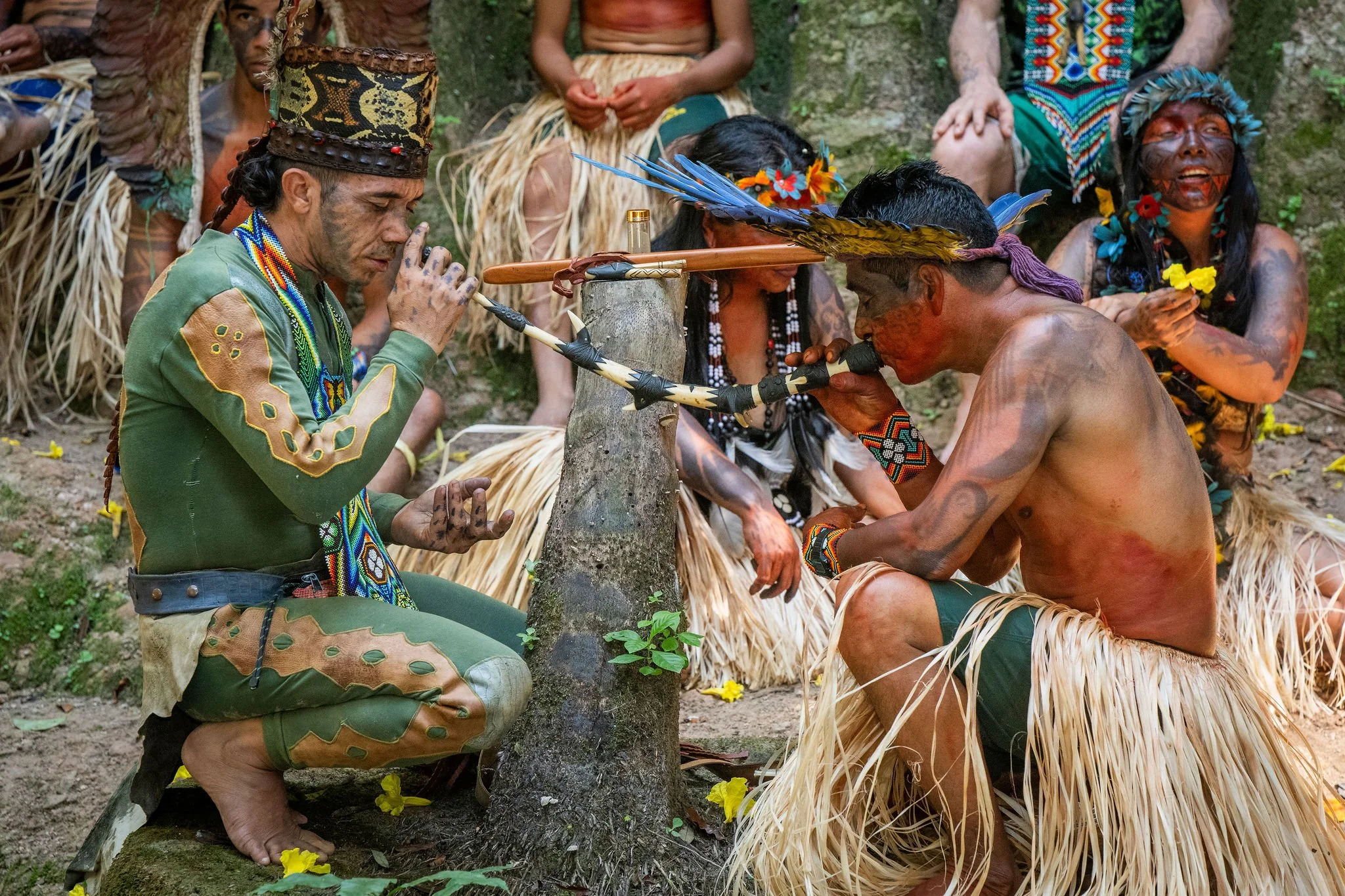
Hapé
Hapé is a sacred snuff, made from a plant grown in our territory and the ashes of forest trees, ground fine and prepared with prayer. Each family holds its own recipe, and every blend carries the intention put into it.
It is blown into the nostrils through a small pipe — by one of us, or between two people. The feeling is strong and immediate, then it settles. It clears the head, grounds the body, and quiets the noise so you can be present. For us, it is an everyday medicine. We use it before work, before conversation, before ceremony, and whenever the mind needs to come back into the body.
It is offered gently here. You take it when you want it, and you are always free to say no.
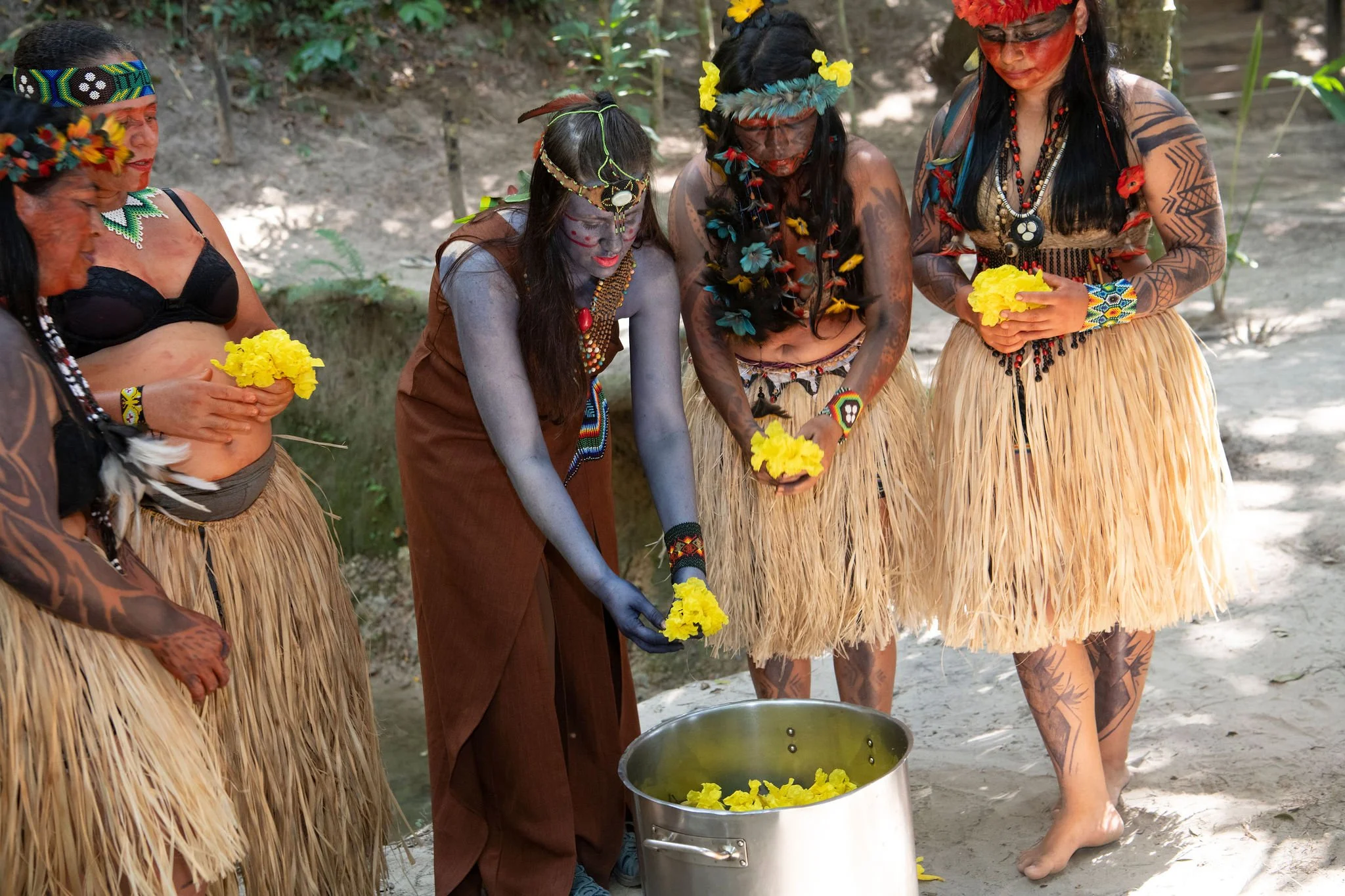
Forest Baths
A forest bath is made from plants gathered fresh — leaves, barks, flowers, vines — chosen for what is needed. They are boiled so the water takes in everything the plants carry, and the preparation is its own work, done with prayer. No two baths are the same.
The water is poured over you warm, from the head down. It moves into the body slowly and goes deep, and what it leaves behind is lightness.
In our home there is a bath for everything. For sickness. For the energy a person is carrying. For calling something in, or for taking something away. There are so many herbs to choose from, and as many intentions to hold while preparing them. This is one of the strongest medicines of the people of the Amazon, and on our lands it has been held this way for generations.
We use these baths to wash. Not only the body — the day you carried in, the heaviness you did not know you were holding, whatever clung to you on the way here. Before ceremony, after hard work, when someone is low, when a child is restless.
Here they are offered in the open air, among the trees when we can. Bring a bathing suit so you are comfortable receiving it. You come out of it clean in a way that is hard to describe until you have felt it.
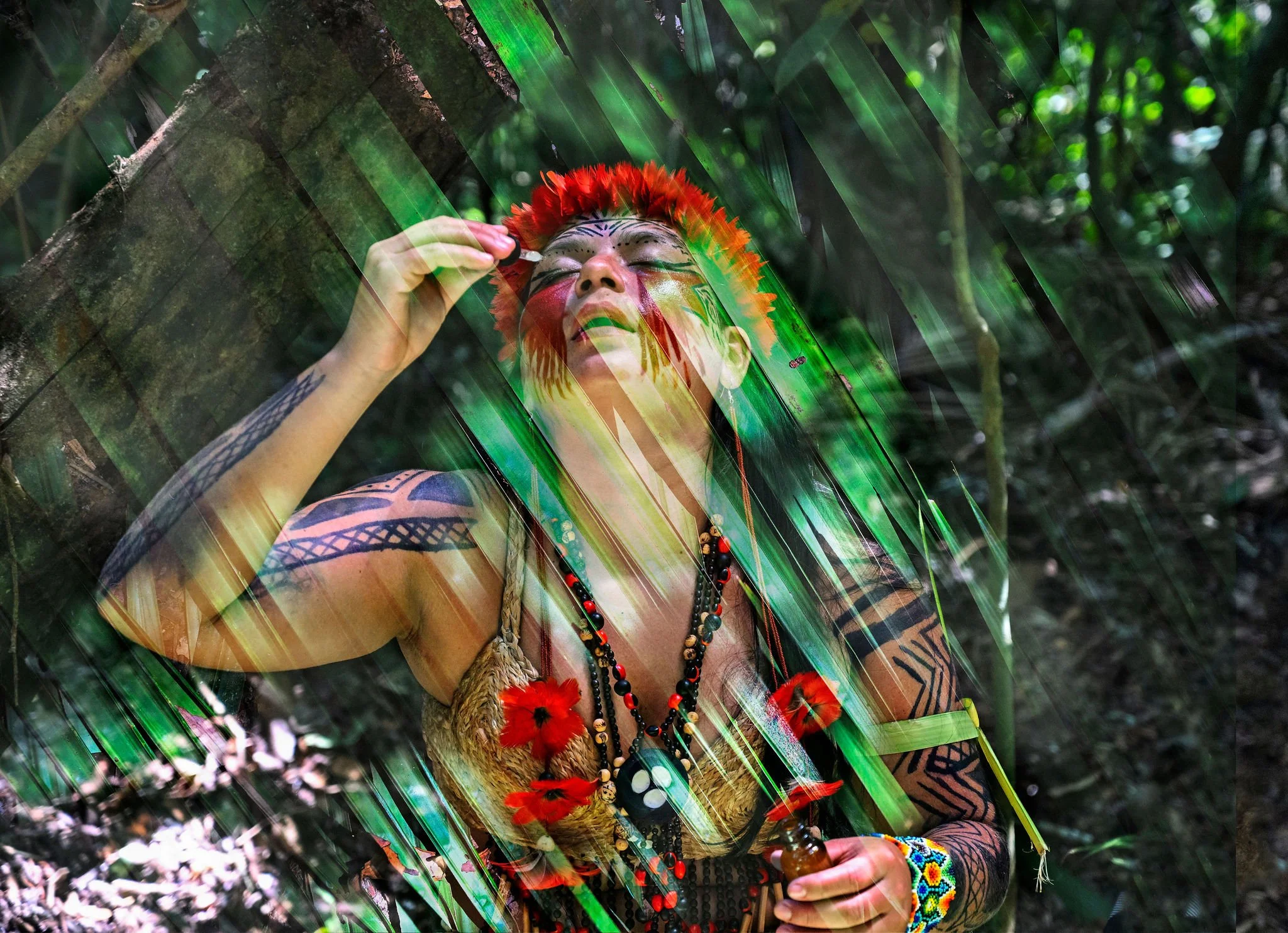
Sananga
Sananga is an eye medicine, pressed from the root of a small shrub that grows in our forest. It is given as drops, one eye at a time.
The sting is sharp and comes fast — most people feel it strongly for a minute or two, and then it eases and passes. We sit with it and breathe until it settles.
Our hunters have used it for generations to sharpen sight before going into the forest. For us it clears more than the eyes. It cuts through fog and heaviness, opens the vision, and readies a person for ceremony. Many people find the world looks different afterward — brighter, closer, more alive.
It is always your choice. If you would rather not, nothing is lost.
Forest Smudges
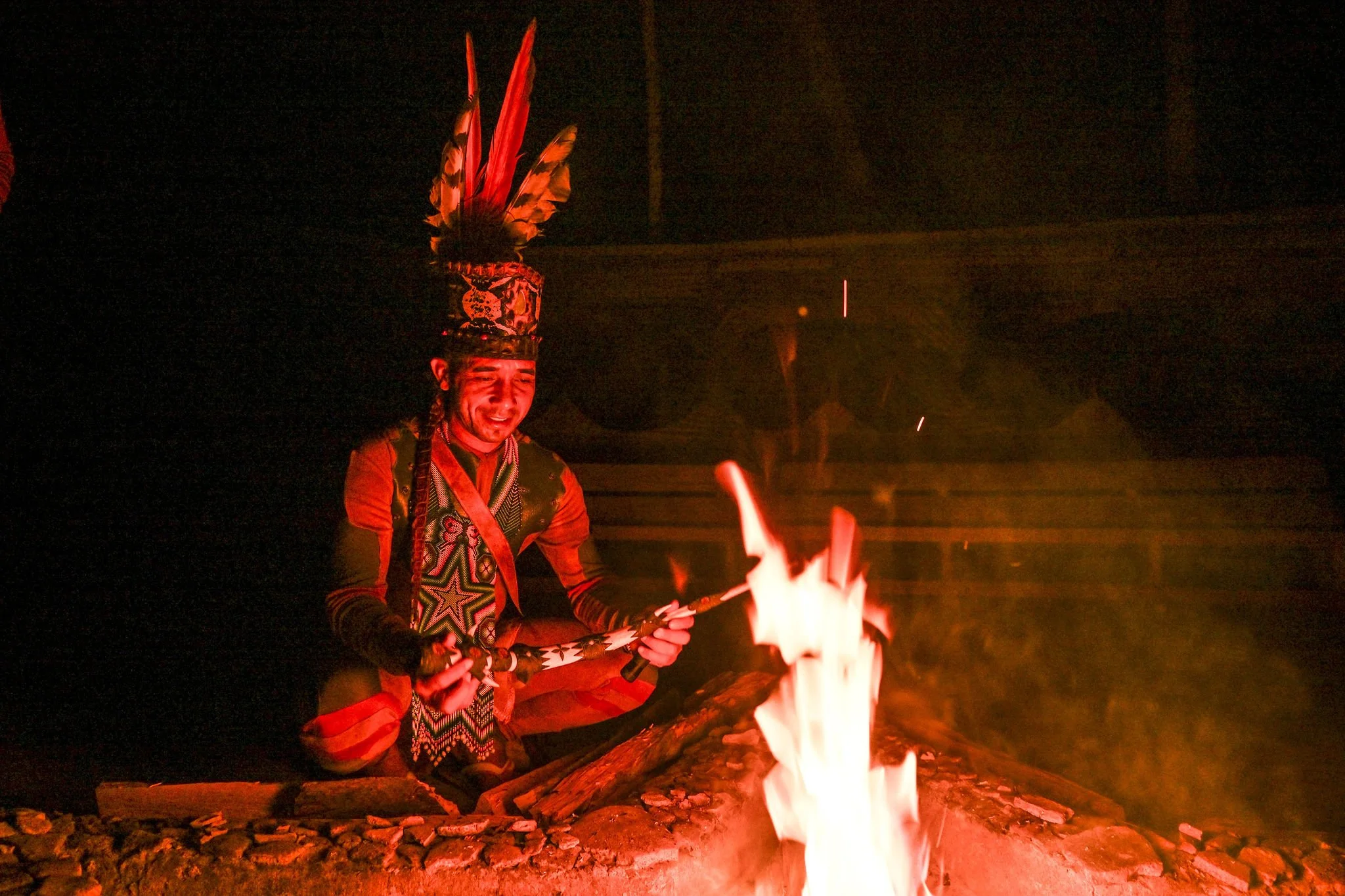
A smudge is made from dried plants and resins of the forest, bound together and lit so the smoke rises. It is one of the oldest things we do — older than any of us can trace.
Everything we burn comes from the Amazon. The forest holds more life than can be counted, and so there is no single blend. Each one is made for the group in front of us and for what is needed in that moment. You never know which smudge will come to you in your work with us.
The smoke is carried around a person, or through a space. It is moved with the hands, sometimes with a feather, sometimes with song. It touches the head, the chest, the back, the hands and feet.
We smudge to clear. Before ceremony, so everyone arrives clean. After ceremony, to close what was opened. When someone comes in from far away carrying the road with them. When a space has held something heavy and needs to be returned to itself.
You do not have to do anything to receive it. Stand, breathe, and let the smoke find you.
Genipapo
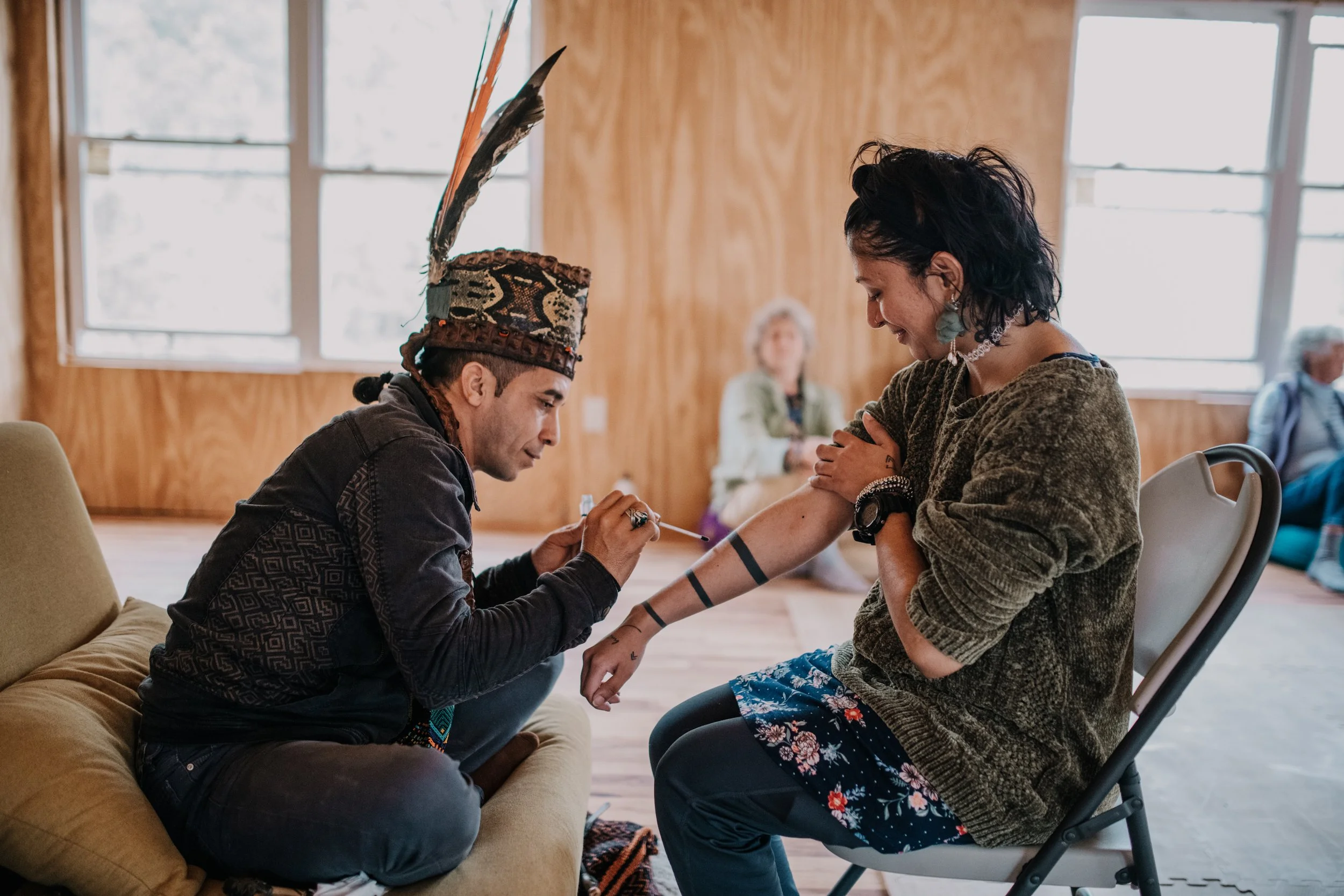
Genipapo is a fruit that grows in our forest. Its juice runs clear when it is pressed, and then darkens on the skin over the hours that follow until it is deep blue-black.
We use it to paint. The designs are ancestral codes — a technology of our people, carried down and placed with intention. They shield us from the sun and from insects, and they protect us from what moves in the air around us. In our home in the Amazon we also use genipapo to draw what is heavy out of the body.
At our gatherings, the painting is done by Prince Haru. He places each design himself, in quiet, with care.
The markings stay on the skin for several days and then fade on their own. For us, that time of carrying the design is part of the medicine. You wear it home with you, and it stays with you as it goes.
If you receive genipapo here, know that it will be visible for a while afterward. Many people find that they come to love it.
Kambô
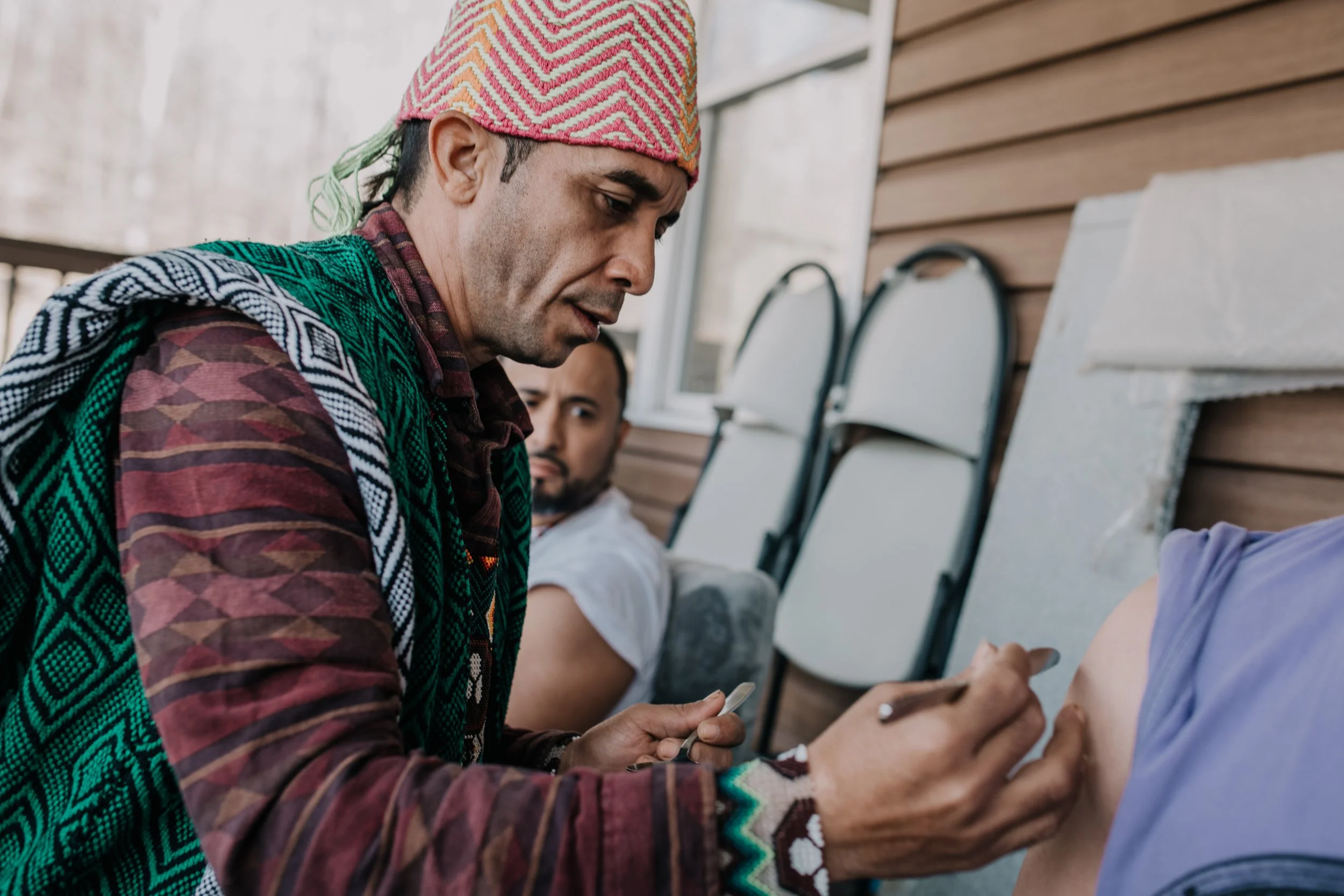
Kambô comes from a frog of the Amazon. We sing to her, and she comes into the hand on her own and offers what she carries. Then she returns to the trees. This is how it is done among our people, and it is done with love.
There are traditions elsewhere that take from these frogs by force, without knowing there is another way. When the medicine is given freely, it carries a different feeling — and that is what we bring to the work.
It is applied to small points opened on the skin. What follows comes fast — heat rises, the face and body may swell, the stomach turns, and there is purging. It is strong, and it does not last long. Most people are through it in under an hour, and afterward there is a stillness that is hard to describe.
Our people have carried kambô for generations. It clears what has gone stagnant, lifts panema — the heaviness or bad luck that settles on a person — and returns strength, so a person can walk forward with courage. We take it together, and we heal together.
This medicine is not for everyone. It asks a lot of the body, and it is offered one-on-one, after we have talked with you about your health and what you are carrying. Some people should not receive it, and we will tell you honestly if we think it is not right for you.
One-on-One Sessions
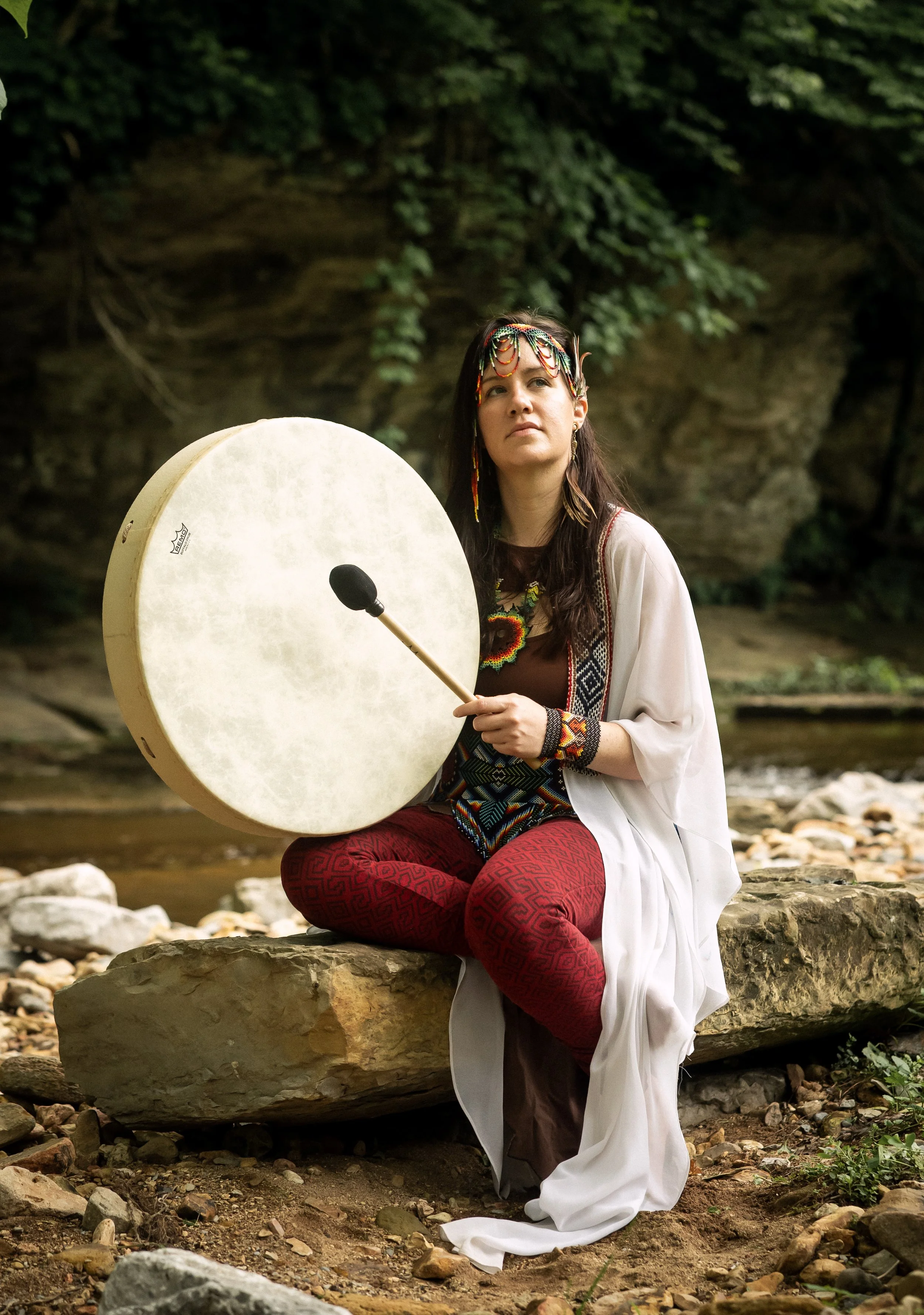
Alongside the group work, there is time to sit with Dr. Hayra one-on-one.
These sessions are private. They are a place to bring what is moving in you — what came up in ceremony, what you have been carrying a long time, what you are not sure how to name yet. Sometimes it is talking. Sometimes it is hands-on work. Sometimes it is sitting quietly while something settles.
Hayra brings many years of training to this — Oriental medicine and acupuncture, esoteric acupuncture, hypnotherapy, Reiki, bodywork, face reading, Akashic Records, and soul retrieval — along with what she has learned in her years with our people. She works by channeling, letting the session find its own way rather than following a set form. What comes is what is needed. Together you go down into the deeper places, past the surface of things, to find the depth that is already within you.
These are booked ahead on the booking page. If you would like one, let us know in advance so we can set aside the time during the day for you.
Where You Stay
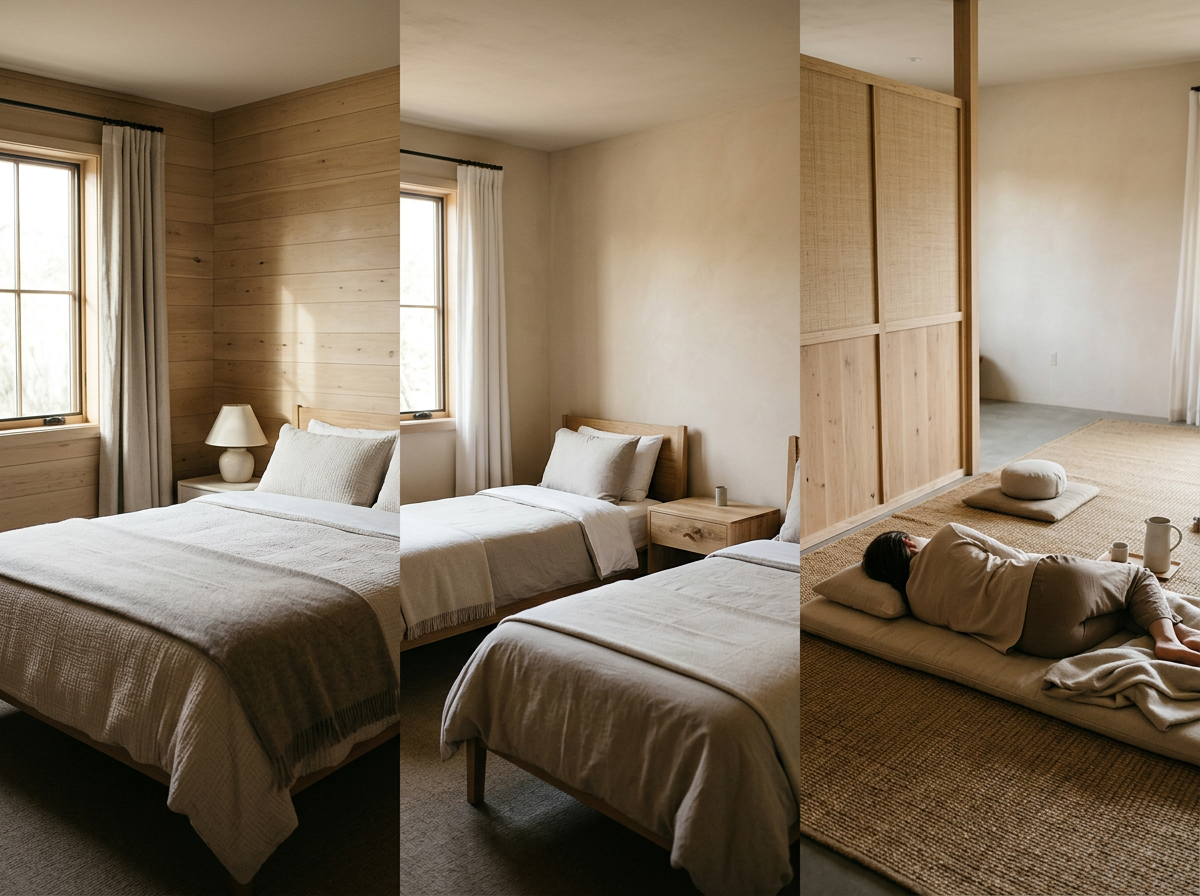
Some of our gatherings are a single night, and some run the full weekend.
If you can, come for the weekend. Two nights lets the work go deeper — there is time to arrive, to be moved, and to settle again before you return to your life. We know not everyone can. If one night is what your schedule allows, that is welcome too. You'll rest, eat breakfast with us in the morning, come back into yourself, and go home whole.
For those staying the weekend, we ask you to stay on the property. Part of the medicine is letting the outside world go for a little while and being fully here, for yourself and for what is being offered.
Accommodations differ by venue. There are shared rooms, private rooms, beds of your own, and at some locations tents. Book early — space is limited, and choosing ahead is the easiest way to get what suits you.
However you end up sleeping, you will be comfortable. And as the days pass and we come to know one another, it stops feeling like a venue with rooms. It becomes what it is: a tribe gathered for a while, working together toward healing.
Food
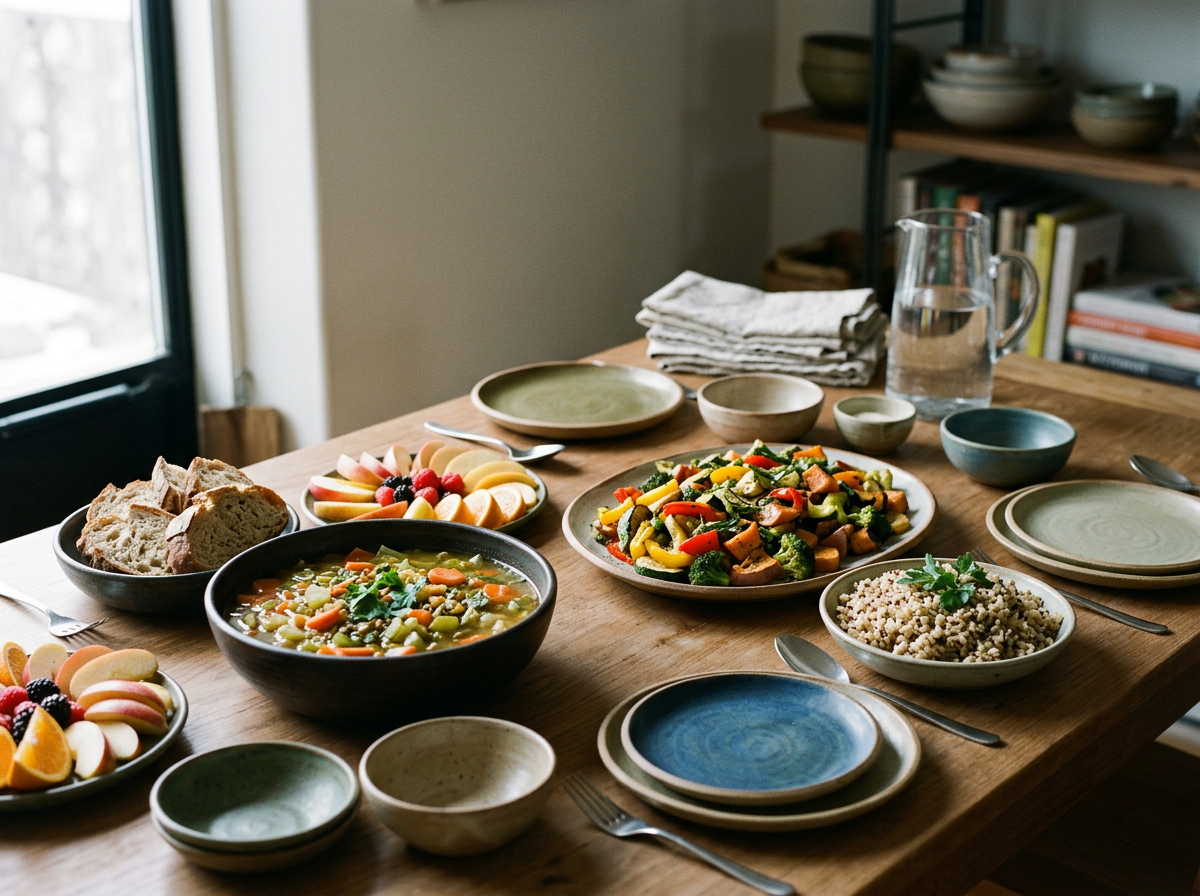
We eat together, and we cook together.
Food at our gatherings is a community space. Some people have a real gift for it and take the lead, and others step in on a shift — chopping, stirring, washing, carrying. You are welcome in that kitchen.
We keep it quiet. The cooking is held in prayer, and the food is held in sacred energy before it reaches the table. This is not extra — it is part of the work, the same as anything else we offer. What goes into the food is what comes out of it.
For many people this becomes one of the teachings they carry home. Preparing a meal is sacred work. It can be done that way in your own kitchen, every day, once you have felt the difference.
We ask everyone to bring a donation toward the food, and we cover what is left.
Teachings and Songs
The work begins in Pano. The first songs of a ceremony are in our own language, carried down through our lineage for thousands of years — the same words, the same melodies, passed from one generation to the next. They hold real weight. Later, when the instruments come in, there are songs in Portuguese and in English too.
Some songs we sing together. Some are carried alone. It depends on what the work is asking for.
Every song has intention. This is the part that is often missed. A song is not background — it is ancestral technology, and it shapes the flow of everything happening in the room. The vibration, the words, the moment a song is chosen and the moment it is set down: all of it moves the circle. There are people holding space now who sing whatever they have heard, without knowing what it carries or where it came from. Sometimes that helps. Sometimes it does not. The difference is knowing.
Our songs are held by people who were raised in them and who understand what they do. As we go, we explain what is being sung and why, so you are not only receiving it but coming to understand it.
Alongside the songs we share the teachings — the old stories of the Earth, the traditions our people carry. None of it was written down. Our symbols are our language, but the story itself moves by voice, from one generation to the next. That is our book, and we bring it with us to share.
Indigenous peoples have stood at the front of forest protection for as long as there has been a forest to protect. That is not new for us; it is who we have always been. In a world losing so much to greed, we think it matters to say plainly that another way is still possible. The ancient ways, the technologies, the flow — they are still here. What we offer is the chance to remember them, and through them to remember who you are.
And we sing as a family. Not a perfect one — nobody here is asking you to sing well. What we are doing together is finding the way back to the love in the heart, and to the purpose each of us carries for the world we live in.
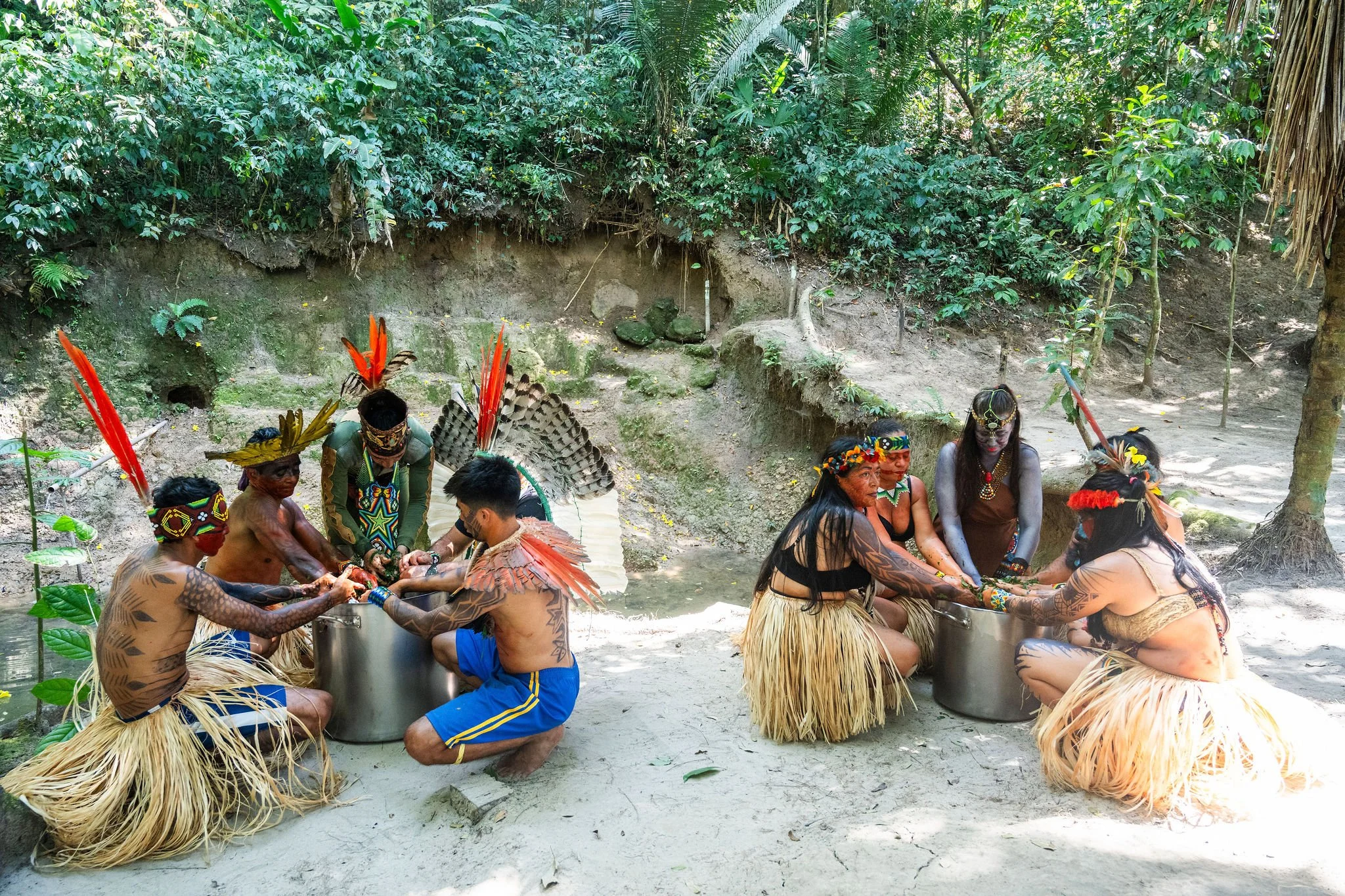
We are leaders of the Kuntanawa people, and hundreds of lives depend on what we are able to build. Our work is to make a dignified life possible after slavery — a foundation laid piece by piece. Villages rebuilt. A community and school space where our children learn our ways, and where people from around the world can come and learn beside them. Trees planted on land that was cleared.
And the demarcation campaign, to secure our territory in law. We are close now. It has taken years, and the pressure has not let up — corporations keep coming to our lands wanting what they want. Every step of that work costs money, and it is the work that protects everything else.
It reaches past our own people, too. There are families across the Amazon with no other way to feed themselves, and the deforestation companies know it. When there is another way to live, there is no need to slash and burn. That is what we are building — for our people, and for our neighbors.
When you come to a gathering, you are not a donor at a distance. You walk with us. Our mother is whole — what happens to the Amazon happens to all of us. Keeping this forest alive, and the sacred medicines within it, is a mission for all of humanity. We are all daughters and sons of the same great mother.
Impact
What you give travels with us back to the forest.
First it covers what it costs to be here — flights from Brazil, the venues, the food, moving a family and a team across a country. We want to be honest about that rather than claim every dollar goes straight home. It doesn't. But what remains does, and it goes into real things.
At every gathering we bring Kuntanawa Goods — medicines, and jewelry strung from forest seeds and marked with our ancient codes, made by our own hands at home. What you buy goes straight back to our people. You can also find these at kuntanawagoods.com. This is the economy we are rebuilding: one where the forest is worth more standing than cleared, where the seeds regenerate and the work grows alongside them. It has been a long time coming, and it is beautiful to watch it take shape.
We live deep in the forest with no roads, and we love it that way, but it carries a responsibility: clean water, food systems that hold, a way to reach the city when someone is sick. These are not small things where we live.
Join a Retreat in North America